Turning Toward

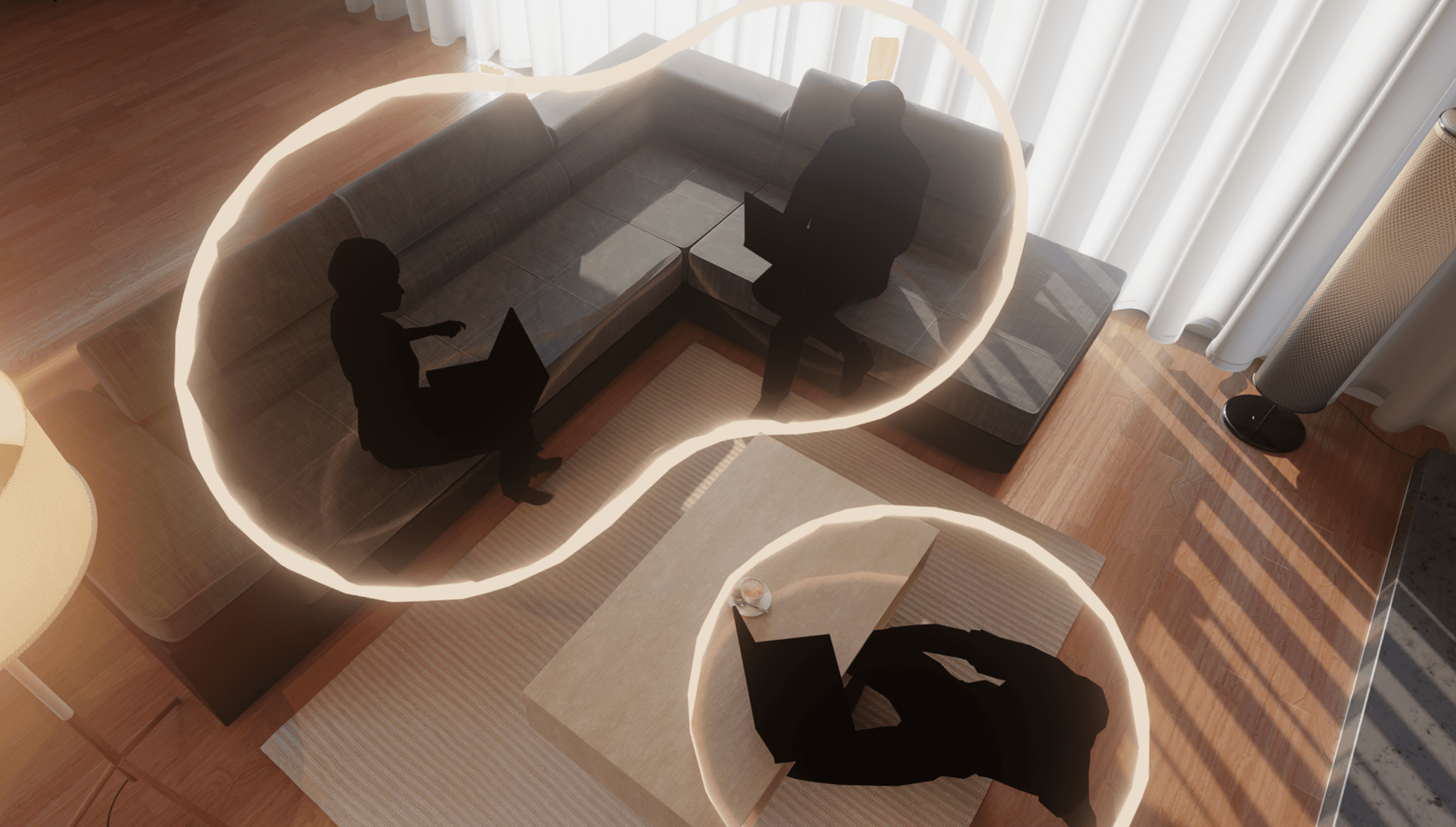
This project explores how people orient themselves in shared home workspaces, proposing a concept where body orientation shapes personal and shared soundscapes, allowing focus zones to subtly expand or merge as people turn toward one another.

Role:

Spatial IxD Designer

Type:

Spatial Experience, Creative Tech

Duration:

2 months

Duration:

2 months

Year:

2026

Designing Shared Home Space Through Orientation, Proximity, and Ambient Sound

Remote work and study have made homes multifunctional environments where work, rest, and social life coexist.

However, home spaces lack the implicit cues that help people indicate when someone is focused, available, or open to collaboration, often resulting in awkward transitions such as repeatedly switching headphones on and off.
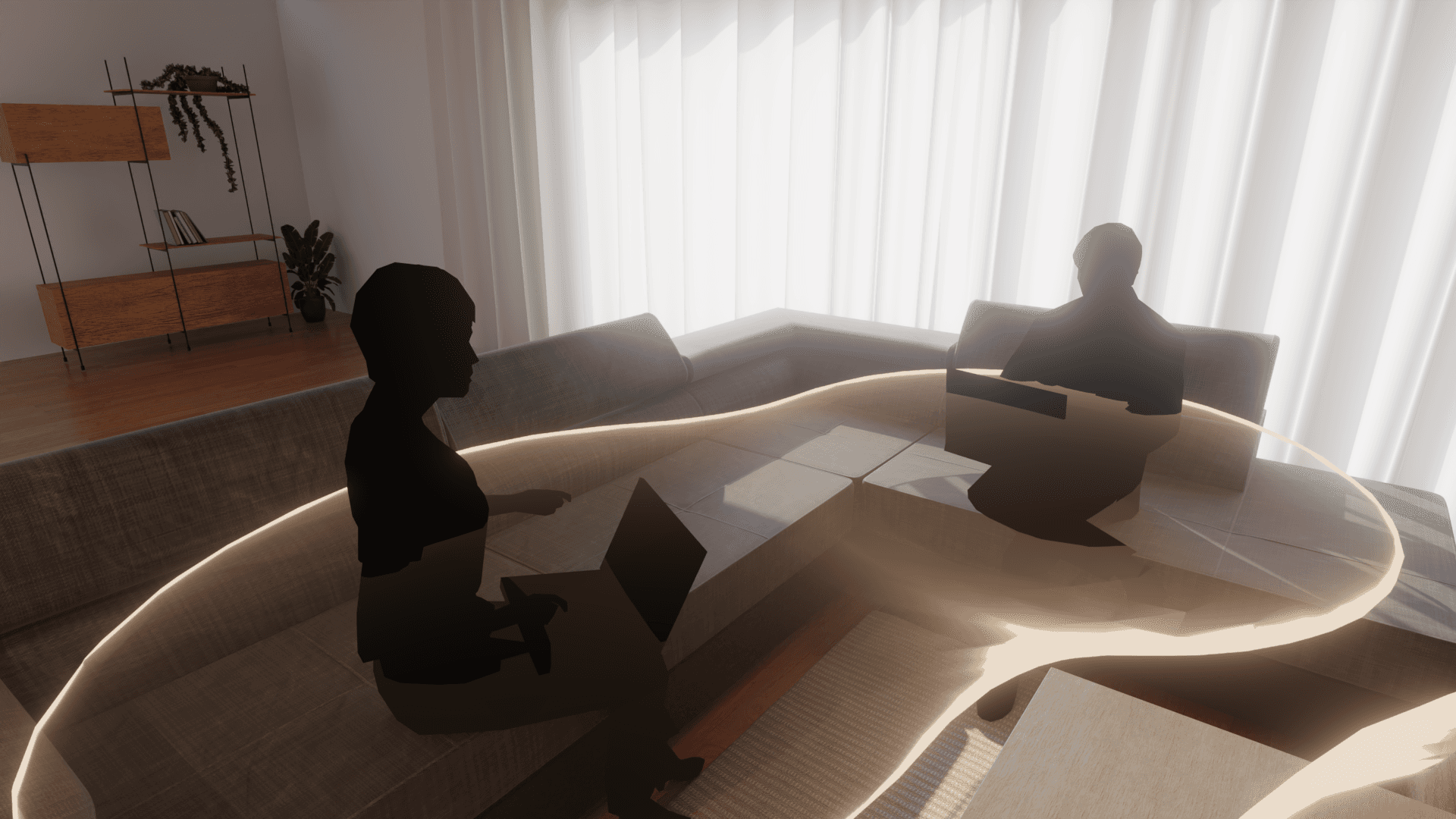
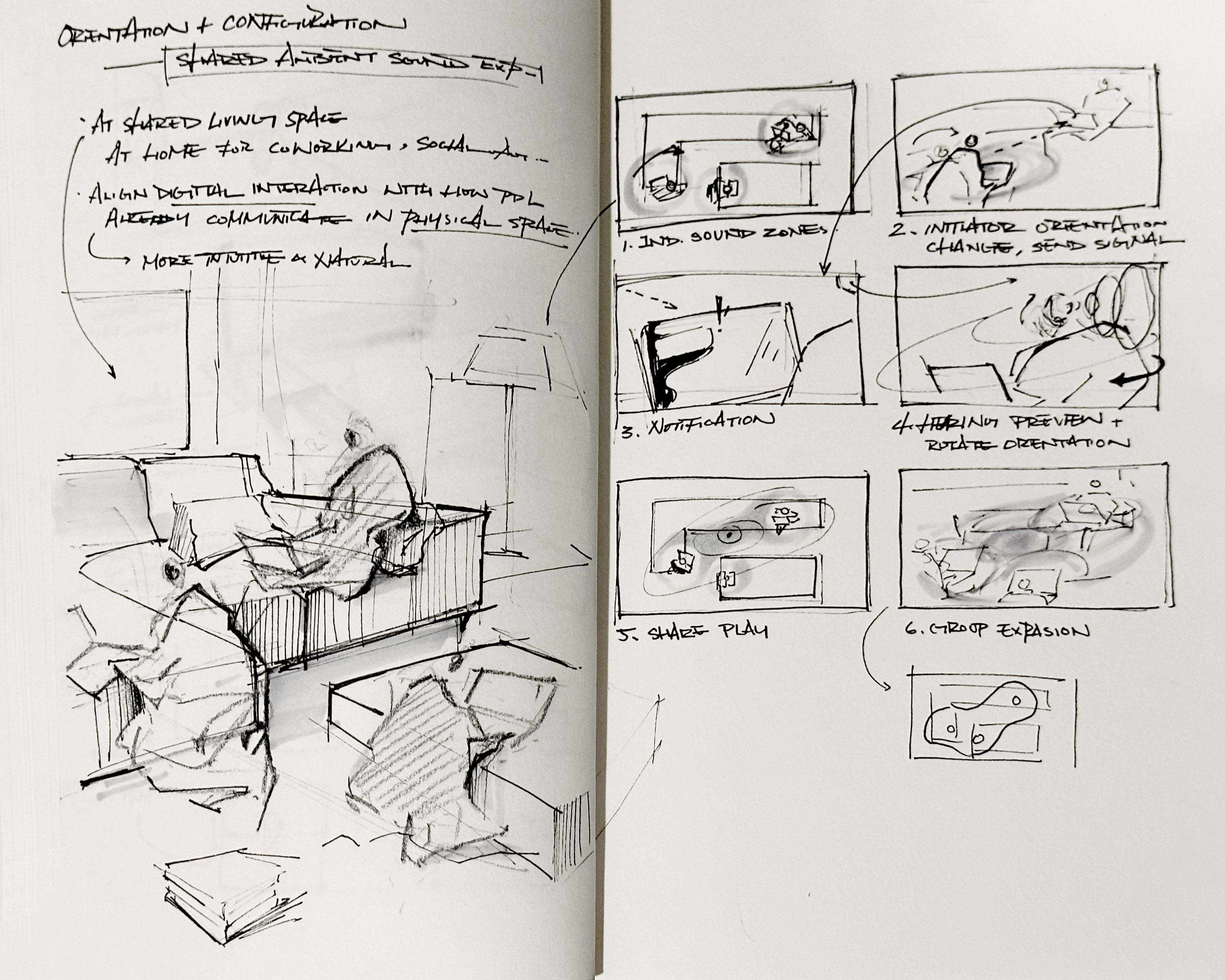
Turning Toward introduces a space where people’s orientation defines their personal and shared soundscapes. As individuals turn toward one another, their audio environments gradually blend, allowing focus zones to expand or merge into shared coworking atmospheres.
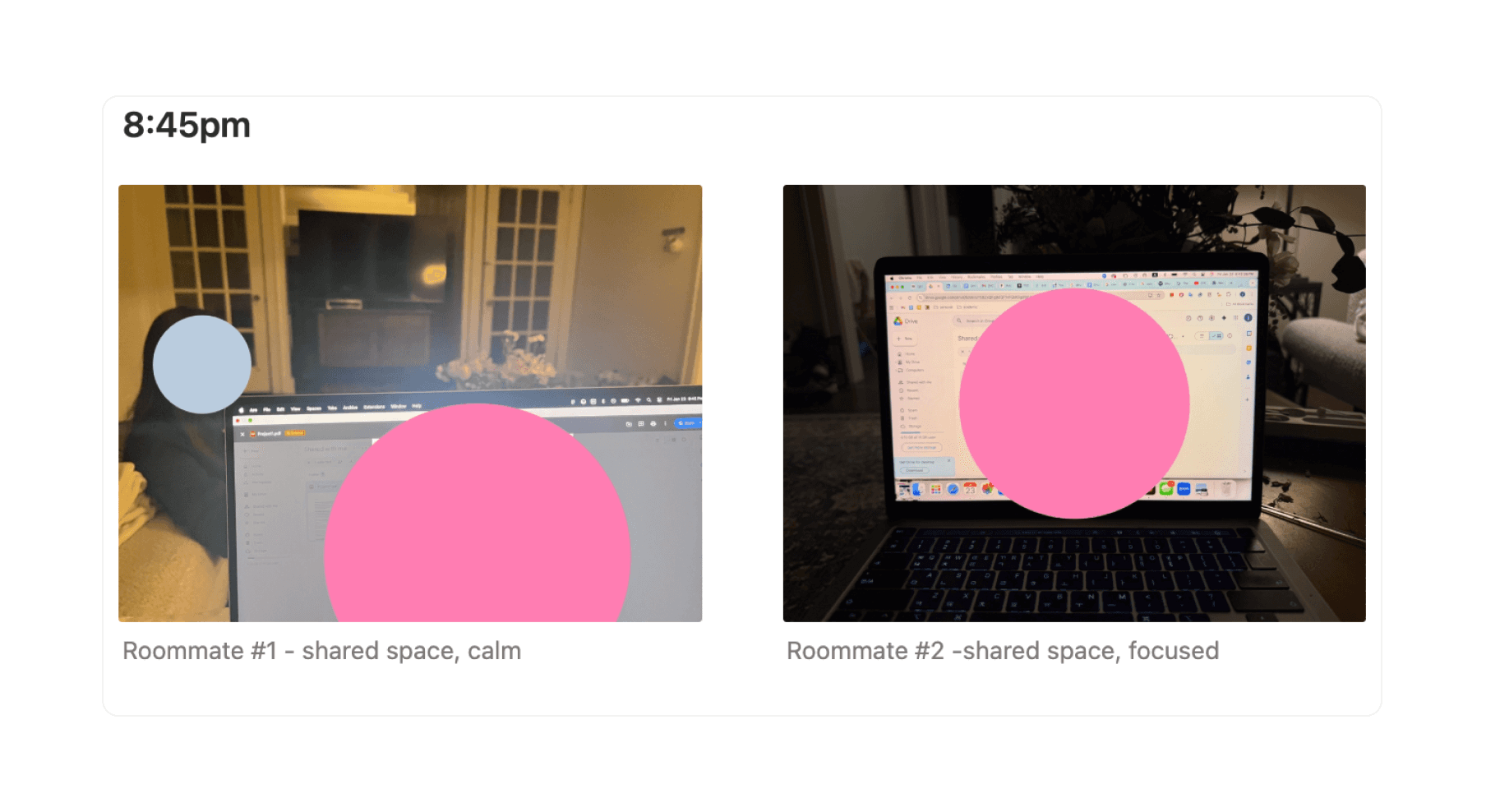
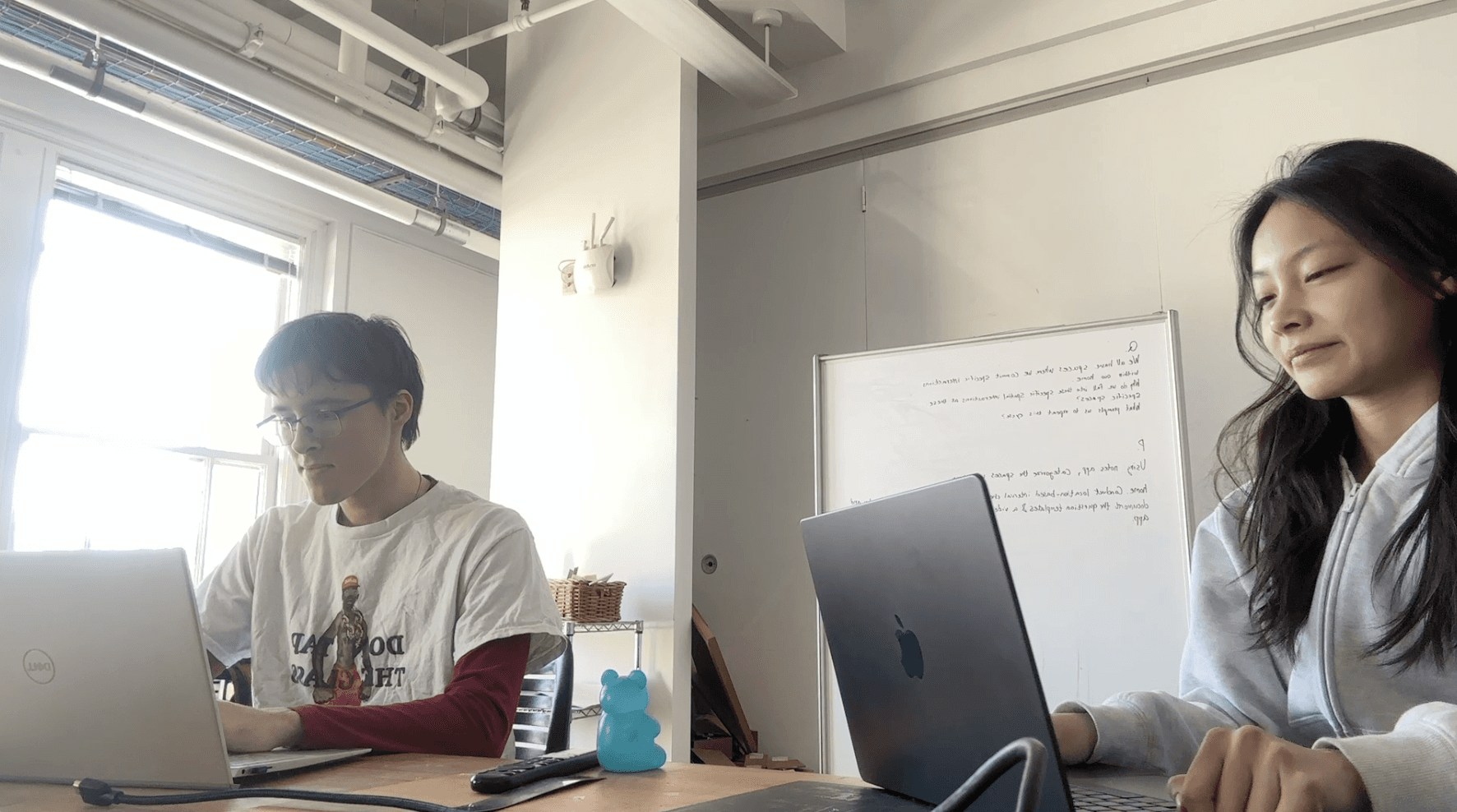
To better understand these dynamics at home, I developed a research protocol to delve further into the topic.

How do people orient themselves differently when sharing a home workspace with others?

3 rommates in shared living space

Capture orientation of attention /15min

a short reflection on notable feelings

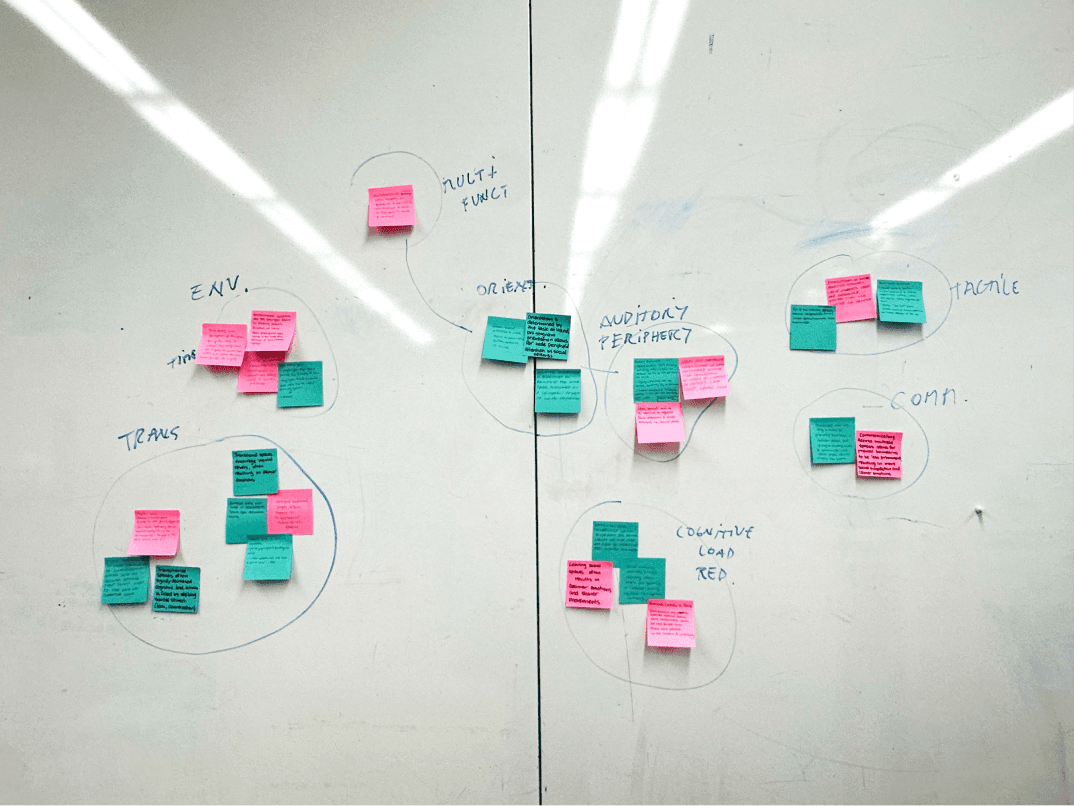
From my research documentation, I found a few notable insights:

Attention and Spatial Awareness

In shared spaces, participants showed wider peripheral awareness of others.
When alone, attention was more narrowly focused on task surfaces.

Body Doubling

All participants reported that, working alongside others improves focus and accountability, although not actively engaging in collaboration.

Sometimes I use noise canceling headphones when I want to listen to music that I think my roomies may not appreciate.

Shared music usually helps with productivity, kinda like cafe ambience

Role of Shared Sound

Participants frequently used shared ambient music or noise-canceling headphones to manage distraction or control exposure to household sounds.

To better understand these dynamics at home, I developed a research protocol to delve further into the topic.

How do people orient themselves differently when sharing a home workspace with others?

3 rommates in shared living space

Capture orientation of attention /15min

a short reflection on notable feelings

From my research documentation, I found a few notable insights:

Attention and Spatial Awareness

In shared spaces, participants showed wider peripheral awareness of others.
When alone, attention was more narrowly focused on task surfaces.

Body Doubling

All participants reported that, working alongside others improves focus and accountability, although not actively engaging in collaboration.

Sometimes I use noise canceling headphones when I want to listen to music that I think my roomies may not appreciate.

Shared music usually helps with productivity, kinda like cafe ambience

Role of Shared Sound

Participants frequently used shared ambient music or noise-canceling headphones to manage distraction or control exposure to household sounds.

Turning Toward: 

Sound-Mediated Shared Space

From my research, I propose a design for shared home spaces where people’s orientation defines their personal/social soundscapes, designed for shared living spaces.

How this unfold in detail?

Process & Prototyping

I began exploring possible design directions through synthesizing research findings, quick sketches and bodystorming exercises.

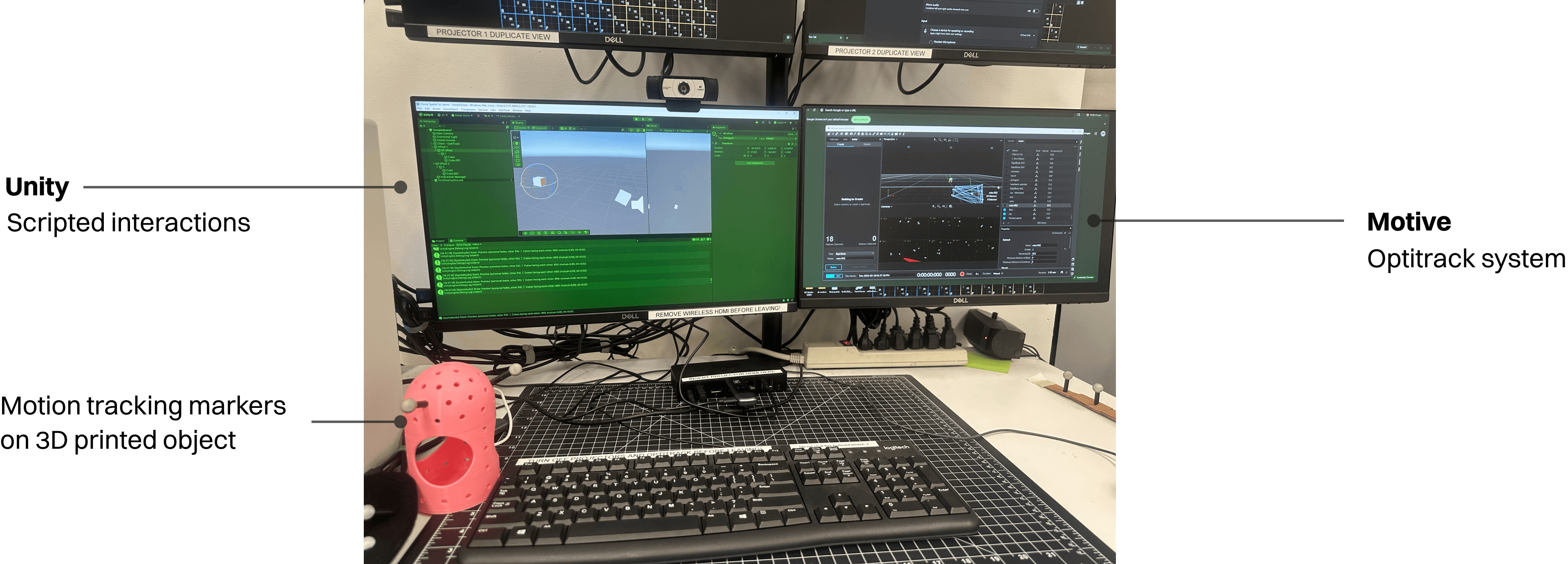
Behind the scenes

Process & Prototyping

I began exploring possible design directions through synthesizing research findings, quick sketches and bodystorming exercises.

Behind the scenes

Reflection

Through research and prototyping, my main objective for this project was to explore how to integrate designed spatial interaction that fits into people’s existing behavior and body language, which emerged from my research. In the current society, where our homes are already filled with physical tech gadgets, this project explores how to design a more natural method of social signaling and collaboration into spatial behavior rather than relying on additional interfaces or explicit devices like noise-cancelling headphones.

Overall, this was a meaningful project for me because it is closely relevant to my current living situation, where I live with other design students in a shared house, and we often use the living room as a common space. Observing how we naturally position ourselves while working in this environment helped me better understand how spatial behavior emerges in everyday life rather than in controlled settings.

Reflection

Through research and prototyping, my main objective for this project was to explore how to integrate designed spatial interaction that fits into people’s existing behavior and body language, which emerged from my research. In the current society, where our homes are already filled with physical tech gadgets, this project explores how to design a more natural method of social signaling and collaboration into spatial behavior rather than relying on additional interfaces or explicit devices like noise-cancelling headphones.

Overall, this was a meaningful project for me because it is closely relevant to my current living situation, where I live with other design students in a shared house, and we often use the living room as a common space. Observing how we naturally position ourselves while working in this environment helped me better understand how spatial behavior emerges in everyday life rather than in controlled settings.